Responsive repairs for commercial HVAC systems
Fast diagnostics, clear communication, and clean repairs to restore comfort for your staff and customers with minimal downtime.
- ✓Emergency and same-day service options
- ✓All major brands and light commercial equipment
- ✓Upfront pricing and documented findings
- ✓Stocked trucks to reduce return visits
“Great service, fair pricing, and super reliable. Quick to respond and very professional.”
Common commercial HVAC repairs
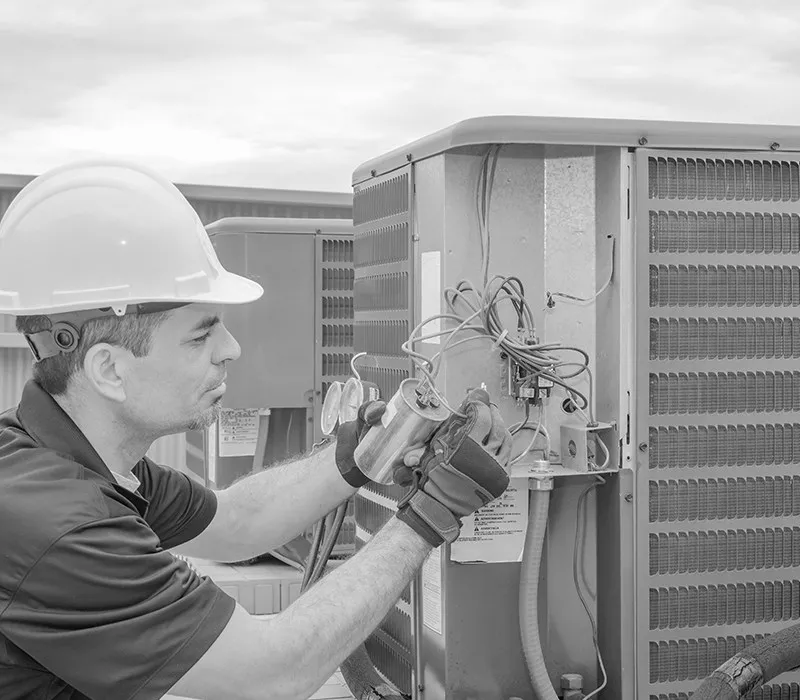
- No cooling or heating. Compressors, fan motors, contactors, and controls diagnosed and repaired quickly.
- Airflow and comfort issues. Belts, bearings, filters, and balancing to improve airflow and even temperatures.
- Thermostat or control failures. Smart stats, zoning, or commercial controls restored and configured.
- Leak and drain problems. Condensate clogs, pans, pumps, and refrigerant leaks located and resolved.
Why choose us for commercial service
- ✓Local, responsive team serving Phenix City & East Alabama
- ✓Clean, professional workmanship in occupied spaces
- ✓Clear communication and repair vs. replace guidance
- ✓After-hours availability for urgent issues
Need commercial HVAC repairs now? Call (334) 846-0550 and we’ll dispatch the next available tech.
Every hour of downtime costs your business — call now.
Cold snaps hit fast in East Alabama — get your heating checked now.
Reliable, professional service
You need licensed, insured techs who protect uptime and your investment. We encourage maintenance to prevent breakdowns, but when repairs are unavoidable, we deliver clean workmanship and clear communication.
Signs you need commercial HVAC repair
- Uneven heating or cooling. Don’t wait—imbalances drive up operating costs and accelerate wear.
- Power bill spikes. Sudden jumps often point to failing components or airflow issues—get it checked.
- Noises or odors. New smells or sounds can precede bigger failures.
We set the bar for quality commercial HVAC repairs in Phenix City and East Alabama. Call (334) 846-0550 for fast, professional service.
Repair triage for occupied commercial buildings
The right repair plan starts with operational impact, not just the symptom reported on the call. A complete outage in an occupied clinic or customer-facing retail zone is treated differently from a partial airflow issue in a storage area. Our dispatch notes capture building use, occupancy window, system type, and known history so the technician arrives with the right diagnostic priorities. This approach reduces false starts and helps avoid unnecessary disruption to staff, tenants, and customers.
For multi-unit properties, we isolate which zones are business critical and which can run in temporary mode while repairs are scheduled. That is especially important when a site has several rooftop units at different ages and capacities. Instead of treating the property as one uniform system, we document unit-specific risk and repair order so decision makers can approve high-impact work first.
- Level 1 - full outage: no cooling/heating in occupied areas or safety concern requiring fastest available emergency slot.
- Level 2 - partial outage: one zone or one unit down with temporary mitigation possible while repair is scheduled.
- Level 3 - degraded performance: reduced efficiency or comfort drift that can be planned in a non-emergency window.
Emergency response windows and qualified SLA language
Commercial teams need realistic expectations for emergency support. Response windows vary by weather load, traffic, after-hours demand, and active call queue. In many cases, critical outages can often be triaged the same day when dispatch capacity is available. After-hours incidents are usually handled in the next emergency window with priority based on safety and occupancy impact. We avoid fixed-time guarantees that ignore field conditions and instead provide transparent updates as the queue changes.
A qualified SLA model is usually better for commercial operations than a blanket promise. It lets your team choose immediate response for true uptime risk while grouping lower-impact work into scheduled blocks. This reduces overtime cost and keeps repair spending aligned with business priority.
- Critical-call handling: prioritized dispatch and first diagnostic pass in the fastest practical window.
- Escalation policy: if parts lead times prevent same-day completion, we provide temporary mitigation and next-step timing options.
- Communication cadence: clear status updates to building contacts so operations teams can plan around repair progress.
Commercial repair cost drivers and budget planning
Repair pricing in commercial HVAC is influenced by diagnostic complexity, component availability, rooftop access, controls integration, and whether work must happen after hours. A straightforward contactor or capacitor issue is usually less costly than control board or compressor failures that require deeper testing and specialized parts. Multi-unit buildings also add coordination overhead because not all zones can be shut down at once.
Rather than planning budget around a single average ticket, commercial operators generally perform better with a three-part model: routine corrective repairs, high-risk component reserve, and a replacement contingency for aging units. Exact numbers depend on your equipment mix and access conditions, but this structure helps avoid surprise spend when extreme weather exposes deferred issues.
- Labor-time drivers: troubleshooting depth, roof access logistics, and complexity of control sequencing.
- Parts-time drivers: local availability, manufacturer lead time, and compatibility with legacy equipment.
- Operational drivers: occupied-hour work constraints and required staging to minimize tenant disruption.
Brand support, case-style examples, and next steps
We service common commercial equipment from Goodman, Carrier, Trane, Lennox, and Ruud and use manufacturer documentation when interpreting fault behavior and replacement part options. Brand differences matter in the field: similar symptoms may have different root causes based on control logic, component layout, and age profile. That is why our repair recommendation includes cause, risk level, and a practical path forward, not only a part replacement quote.
Example workflow: a multi-unit office property reports midday comfort complaints on upper-floor suites while the lobby appears normal. We isolate affected zones, verify airflow and electrical readings, and prioritize units that drive the highest tenant impact. If one unit is near end-of-life, we document repair viability and replacement planning so ownership can decide based on reliability, not short-term pressure.
If your building is managing repeat failures, call (334) 846-0550 and request a commercial diagnostic plan with prioritized repair options.
Commercial HVAC Repair in Phenix City, AL
Phenix City is our home base for commercial repairs. Restaurants, offices, and retail spaces rely on prompt dispatch and familiar knowledge of local building codes and systems.
Commercial HVAC Repair in Opelika, AL
Opelika commercial properties including Tiger Town retail, industrial facilities, and downtown offices receive same-day scheduling for HVAC diagnostics and repair.
Commercial HVAC Repair in Auburn, AL
Auburn commercial HVAC repair covers campus-area businesses, restaurants, retail, and multi-tenant buildings with priority scheduling during peak seasons.
Commercial HVAC Repair in Montgomery, AL
Montgomery commercial repairs are batched for efficient metro coverage. EastChase, downtown, and Government Plaza businesses receive priority dispatch for system failures.
Authoritative Sources
Official guidance and credential resources referenced for this topic:
We're ready when you are.
Request service online or call now. We'll follow up quickly to confirm details and scheduling.
24/7 emergency service available.