Preventative plans for reliable commercial comfort
Scheduled maintenance lowers operating costs, reduces surprise breakdowns, and keeps tenants, staff, and customers comfortable.
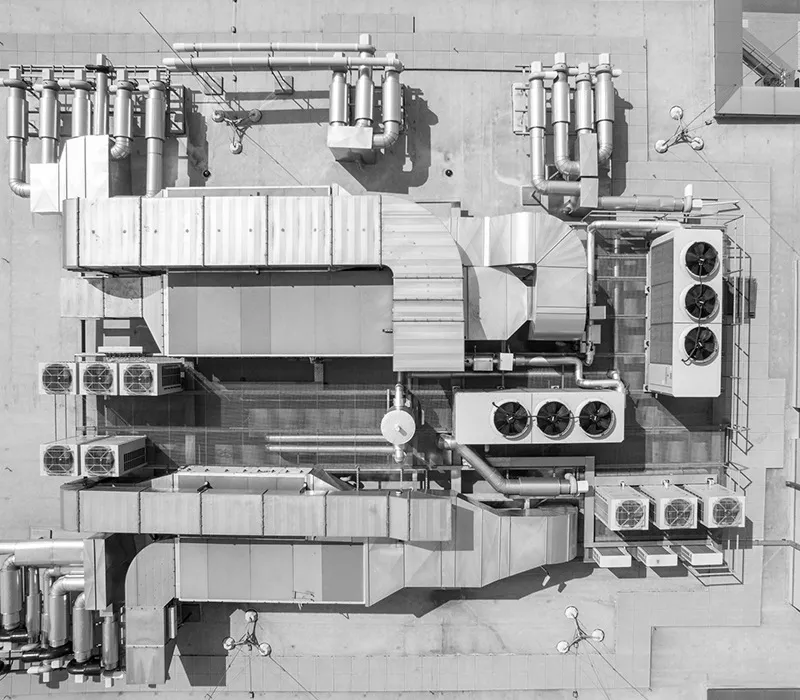
- ✓Seasonal inspections and tune-ups for rooftop and split systems
- ✓Filter and belt changes, coil cleaning, and drain maintenance
- ✓Performance checks: refrigerant pressures, airflow, controls, safeties
- ✓Documentation with recommendations to plan repairs before failure
“Great service, fair pricing, and super reliable. Quick to respond and very professional.”
What’s included
- ✓Coil cleaning, drain service, and pan checks
- ✓Belts, bearings, and motor inspections
- ✓Thermostat, control, and safety verification
- ✓Airflow checks and filter replacements
- ✓Refrigerant pressures and temperature splits
- ✓Electrical checks (amps, volts, connections)
Why a maintenance plan?
- Reduce downtime. Find issues early and schedule repairs before they become emergencies.
- Control costs. Clean, tuned systems use less energy and avoid expensive surprise failures.
- Protect equipment life. Proper maintenance extends the lifespan of rooftop units and air handlers.
- Better comfort. Balanced airflow and verified controls mean fewer hot/cold complaints.
Let us tailor a maintenance schedule for your building. Call (334) 846-0550 to set up service.
Breakdowns cost more than maintenance — set up a plan before your next issue.
Cold snaps hit fast in East Alabama — get your heating checked now.
Proactive care for your business
We go above and beyond for local businesses so your HVAC runs well for years. Staying proactive helps you avoid costly repairs, downtime, and comfort complaints.
How maintenance programs help
- Save money vs. emergencies. Planned service is far cheaper than surprise breakdowns.
- Extend equipment life. Tune-ups prevent premature failures so you avoid early replacements.
- Lower energy costs. Efficient systems use less energy and are more eco-friendly.
Keep your business comfortable and running—partner with a reputable team for commercial HVAC maintenance. Call (334) 846-0550 to get scheduled.
Commercial building types we maintain
Commercial maintenance should match how a property is used, not just the equipment model number. A retail store with exterior doors opening all day has a different runtime profile than a professional office where occupancy drops after 5 PM. Medical suites often need tighter humidity control than warehouse space. Mixed-use buildings can have competing comfort demands between first-floor tenants and second-floor offices. Our maintenance process starts with those operating realities and then maps service tasks to the equipment serving each zone.
For multi-tenant and multi-unit properties, we document each unit, thermostat zone, and known comfort complaint so your team has a clear service record. That includes rooftop units, split systems, air handlers, exhaust interactions, and control settings that can affect occupant comfort. The goal is to reduce recurring issues and prevent the same callbacks every season by tracking trends over time instead of treating each visit in isolation.
- Offices and medical spaces: prioritize ventilation performance, filtration cadence, and stable temperature/humidity for occupied hours.
- Retail and restaurant-adjacent spaces: focus on door load, peak-hour recovery, and drain reliability during heavy cooling demand.
- Light industrial and warehouse environments: emphasize motor health, belt condition, and airflow balance for high-runtime equipment.
How preventive maintenance contracts are structured
Most commercial clients choose quarterly visits, but contract design depends on occupancy, equipment age, and the cost of downtime for your operation. Sites with high people traffic and long operating hours typically need tighter intervals than lower-load buildings. Properties with older rooftops may also need increased inspection frequency to catch electrical drift, refrigerant leaks, and belt wear before they become failures.
During onboarding, we review your equipment list and build a service calendar around shoulder-season prep and peak-season risk. Spring visits prioritize cooling reliability, condenser cleanliness, and drain performance. Fall visits emphasize heating readiness, combustion-related safety where applicable, and control verification. Mid-season checks are often added for properties where a comfort outage could disrupt revenue or tenant retention.
- Baseline visit: asset inventory, current-condition assessment, and priority recommendations by urgency.
- Recurring scope: cleaning, electrical checks, airflow and refrigerant performance checks, drain and safety verification, and controls review.
- Service reporting: written findings with watch-list items so your team can budget repairs instead of waiting for emergency failures.
- Escalation pathway: if we detect a critical fault during maintenance, we provide prioritized repair options and next-step scheduling guidance.
Emergency response expectations and qualified SLA windows
Maintenance plans reduce emergency calls, but no commercial system is failure-proof. When a critical issue is found, response timing depends on call volume, time of day, weather demand, and parts availability. For many local clients, urgent no-cooling or no-heat issues can often be triaged the same day, while after-hours events are typically scheduled in the next available emergency window. Exact arrival times are not guaranteed because active field conditions change throughout the day.
To keep expectations clear, we classify incidents by operational impact: total comfort loss in occupied space, partial zone failure, or performance degradation without full outage. That triage model helps you decide whether to dispatch immediately, schedule after close, or group corrective work with planned downtime. It also prevents avoidable overtime spending for non-critical issues that can be safely handled in regular service windows.
- Critical outages: prioritized for fastest available dispatch based on real-time queue and safety/occupancy impact.
- Partial failures: often scheduled in short response windows with temporary mitigation steps to protect comfort.
- Planning-first items: documented and bundled into preventive visits to lower total service cost over the season.
Commercial cost drivers and annual budgeting guidance
Commercial maintenance pricing depends on system count, tonnage range, roof access complexity, control integration, and required service frequency. Light commercial properties with a small number of newer units generally have lower per-visit complexity than sites with mixed equipment ages and recurring comfort complaints. Older systems may require more diagnostic time even during routine visits because baseline performance can shift between seasons.
Instead of relying on a single generic quote, many property owners plan budget in tiers: routine maintenance, expected wear items, and contingency for unplanned failures. This approach improves cash-flow predictability and reduces emergency decision-making. While final pricing is always site-specific, many commercial clients find that planned maintenance is significantly more cost-effective than repeated emergency dispatches, especially during summer demand spikes in East Alabama.
- Primary drivers: number of units, rooftop access conditions, filter and belt schedules, control system complexity, and service-hour timing.
- Secondary drivers: parts lead times, deferred maintenance backlog, and frequency of tenant comfort callbacks.
- Budget strategy: combine preventive contract cost with a planned reserve for likely wear items and age-related repairs.
Brand-specific maintenance notes and multi-unit example
Commercial sites in our market frequently use equipment from Goodman, Carrier, Trane, Lennox, and Ruud. Each brand family has different control behavior, service bulletins, and maintenance sensitivities over time. We use manufacturer guidance for inspection points and verify field performance against measured airflow, temperature split, electrical values, and drain operation rather than relying on one-size-fits-all assumptions.
Example planning scenario: a multi-unit office-retail property enters summer with recurring afternoon hot spots in two tenant suites. Instead of waiting for failures, the maintenance plan prioritizes coil cleaning, thermostat calibration checks, and airflow verification in those zones first, then schedules follow-up trending during peak-load weeks. This kind of targeted sequencing can reduce repeat complaints and avoid reactive service calls during your busiest business hours.
Ready to standardize maintenance across one site or multiple locations? Call (334) 846-0550 and we will map a schedule around your operating hours and risk priorities.
Commercial HVAC Maintenance in Phenix City, AL
Scheduled preventive maintenance for Phenix City businesses keeps systems running reliably through summer peaks and reduces emergency calls.
Commercial HVAC Maintenance in Opelika, AL
Opelika commercial maintenance plans cover quarterly inspections, filter service, and documented tune-ups for restaurants, retail, and offices.
Commercial HVAC Maintenance in Auburn, AL
Auburn commercial properties benefit from documented maintenance that satisfies lease requirements and reduces costly mid-season breakdowns.
Commercial HVAC Maintenance in Montgomery, AL
Montgomery commercial maintenance is scheduled in efficient service routes. Multi-location businesses receive coordinated scheduling across sites.
Authoritative Sources
Official guidance and credential resources referenced for this topic:
We're ready when you are.
Request service online or call now. We'll follow up quickly to confirm details and scheduling.
24/7 emergency service available.