1. Thermostat mode, schedule, or battery issue
Symptoms: System does not start, display is blank, or heat call never reaches equipment.
DIY check: Set thermostat to Heat, raise setpoint 3-5 degrees, and replace batteries if needed.
Professional fix: Confirm control signal, recalibrate thermostat, and repair wiring/control faults.
2. Dirty filter causing airflow or limit switch problems
Symptoms: Furnace starts briefly then shuts down, or airflow is weak with poor temperature rise.
DIY check: Replace dirty filter and ensure major supply/return grilles are open.
Professional fix: Measure airflow/static pressure, reset safety controls, and correct root airflow restrictions.
3. Ignition or flame-sensing failure
Symptoms: Furnace attempts to start but shuts down quickly and may retry repeatedly.
DIY check: Listen for startup attempts. Do not disassemble burner compartment.
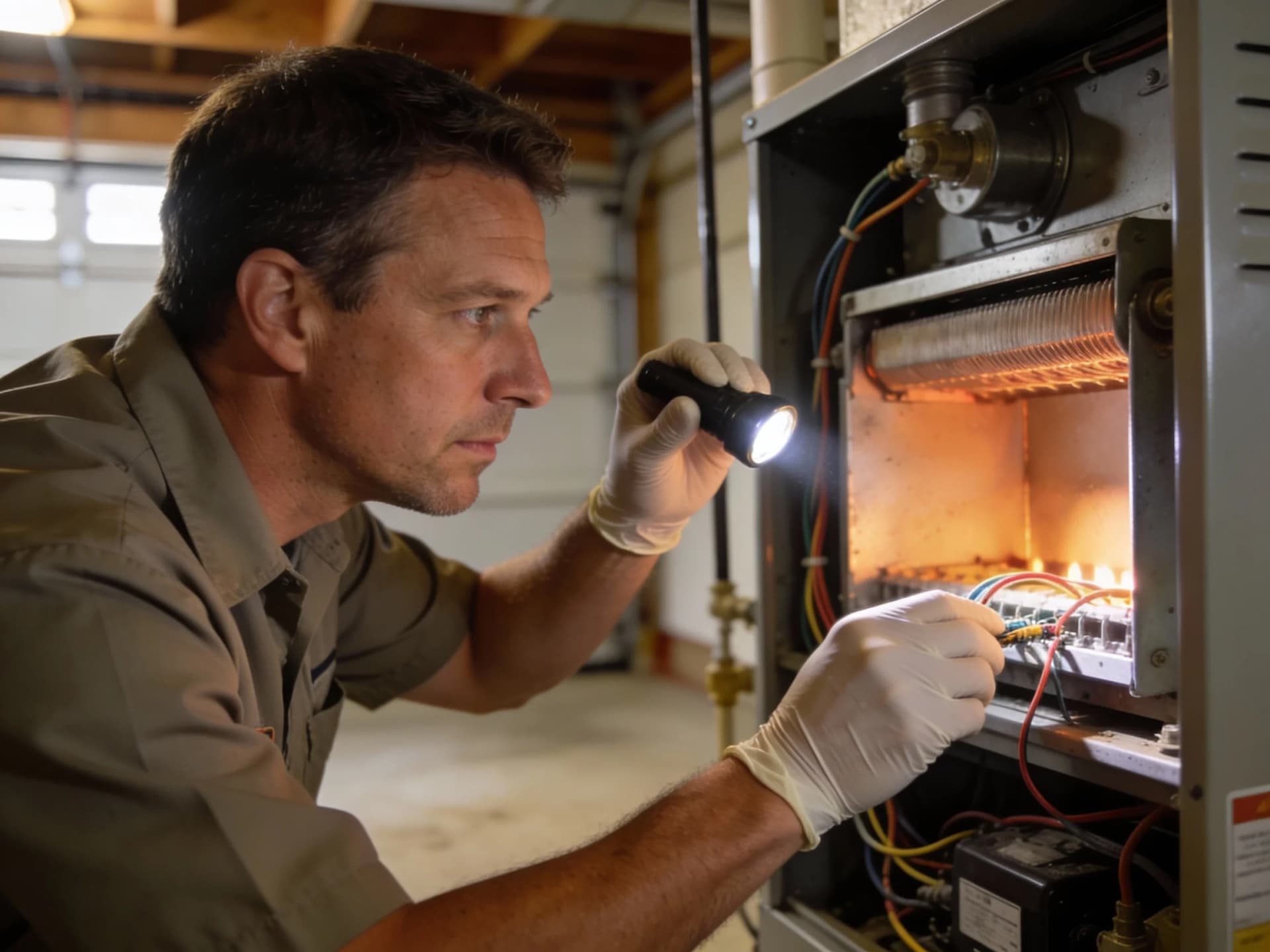
Professional fix: Clean/replace flame sensor, test igniter performance, and verify safe combustion sequence.
4. Tripped breaker, blown fuse, or power interruption
Symptoms: No response from indoor unit or outdoor heat pump during heat call.
DIY check: Check dedicated HVAC breakers once and reset only one time if tripped.
Professional fix: Find electrical cause of trip, replace failed components, and verify safe amperage draw.
5. Heat pump defrost or reversing valve fault
Symptoms: Heat pump runs but delivers cool air, or outdoor unit ices heavily during heating mode.
DIY check: Check for heavy ice on outdoor coil and whether AUX/EM heat indicator appears.
Professional fix: Test defrost board/sensors, reversing valve operation, and refrigerant performance.
6. Auxiliary heat not engaging during cold weather
Symptoms: Heat pump runs continuously with little indoor temperature rise.
DIY check: Temporarily switch to Emergency Heat if system supports it and monitor response.
Professional fix: Verify strip heat staging, relays, and control logic for proper backup heat operation.
7. Safety lockout from condensate or venting issues
Symptoms: Heating stops unexpectedly and may display fault codes.
DIY check: Look for visible water at equipment base and confirm return vents are not blocked.
Professional fix: Clear drains/venting issues, reset lockout conditions, and test full heating cycle.
8. Blower motor or control board failure
Symptoms: Equipment may heat internally but air is not distributed, or system fails to complete cycle.
DIY check: Turn system off if you smell burning or hear grinding noises.
Professional fix: Perform electrical diagnostics, replace failed controls or motors, and verify safe operation.