
Publicado: 14 de febrero de 2026
Ultima actualizacion: 14 de febrero de 2026
Cuándo reparar vs reemplazar tu A/C en Alabama
Escrito por Joseph Underwood, Fundador y tecnico HVAC certificado por EPA, AL #24178
Cada verano, muchos propietarios en Alabama enfrentan la misma duda: pagar una reparación más o invertir en reemplazo. Esta guía te da un marco simple basado en edad del equipo, costo de reparación, confort interior y desempeño frente a humedad.
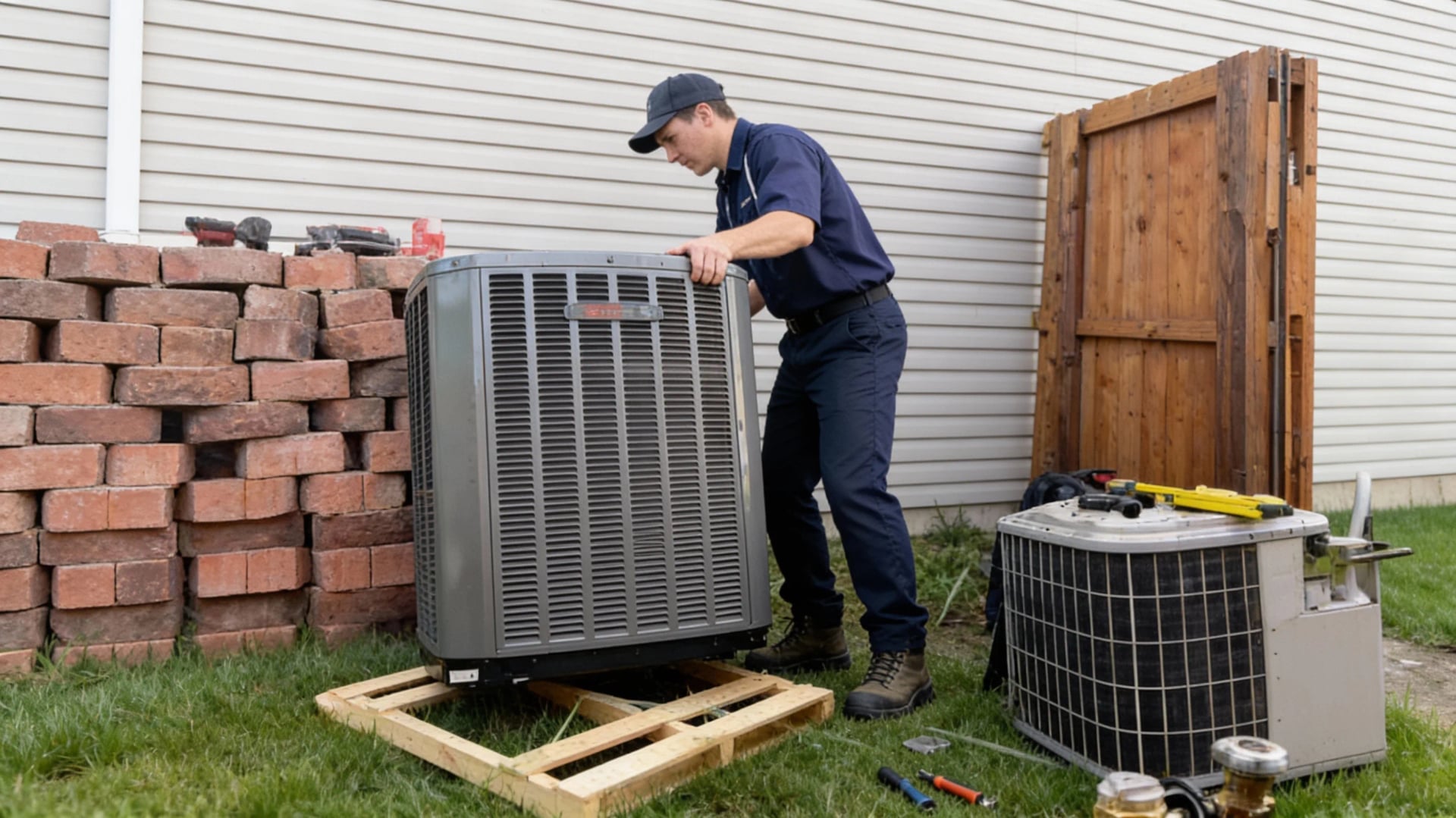
Paso 1: usa el umbral de costo 40-50%
Divide la cotización de reparación entre el costo estimado de reemplazo. Si el resultado es 0.4 o mayor y el equipo ya es antiguo, en muchos casos el reemplazo es la decisión inteligente. Ejemplo: una reparación de $2,400 en un sistema de $6,000 equivale a 40%. Si el equipo tiene 12 años y las facturas suben, reemplazar suele dar mejor valor a largo plazo.
Paso 2: incluye edad del equipo y riesgo de refrigerante
- ✓0 a 8 años: normalmente conviene reparar, salvo fallas mayores.
- ✓9 a 12 años: compara costo de reparación, tendencia de consumo y quejas de confort.
- ✓13 a 15+ años: el reemplazo se vuelve cada vez más favorable.
- ✓Sistemas con R-22: el refrigerante es caro y hay menos disponibilidad de refacciones.
Paso 3: considera la humedad de Alabama
En East Alabama, el confort no depende solo de la temperatura. Si la casa se siente pegajosa, el equipo corre sin parar o tienes cuartos traseros calientes, puede haber problemas de carga latente, flujo de aire o dimensionamiento. Los sistemas modernos de velocidad variable mejoran control de humedad y reducen estrés operativo.
Antes de reemplazar, revisa presión estática y capacidad de retorno. Un equipo nuevo sobre ductos deficientes también puede rendir mal.
Paso 4: evalúa confiabilidad y disrupción
Un sistema que falla repetidamente durante olas de calor tiene costos ocultos: noches con poco descanso, tiempo perdido y cargos de emergencia. Aunque cada reparación parezca aceptable por separado, varias fallas en una sola temporada pueden eliminar cualquier ahorro de corto plazo.
Planear reemplazo en primavera u otoño suele reducir interrupciones frente a esperar una emergencia en pleno verano.
Matriz rápida de decisión
- Equipo con menos de 10 años
- Una sola reparación moderada
- Confort y humedad en niveles aceptables
- Sin historial de fallas recurrentes
- Antigüedad de 13 a 15+ años
- Cotización de reparación cerca del 40 a 50% del reemplazo
- Facturas altas, enfriamiento desigual y humedad alta
- Varias fallas durante los últimos 12 meses
Calendario estacional que cambia la decisión en Alabama
El momento de decidir entre reparar y reemplazar impacta costo total y nivel de estrés. En East Alabama, los reemplazos de emergencia en pleno verano suelen tener mayor presión operativa y menos margen para comparar propuestas. Evaluar en primavera u otoño mejora la calidad de decisión.
Un enfoque práctico es usar cada afinación de primavera como punto de control. Si el equipo ya es antiguo, consume más, y además presenta una reparación mayor, conviene comparar reemplazo antes de la siguiente ola de calor.
- ✓Marzo-abril: mejor ventana para cálculo de carga, revisión de ductos y propuestas comparables.
- ✓Mayo-junio: aún hay margen para planear, pero empiezan a crecer tiempos de espera.
- ✓Julio-agosto: mayor riesgo de decisiones aceleradas por no-enfría en plena demanda.
- ✓Septiembre-octubre: buena etapa para reemplazos planificados antes del siguiente ciclo de calor.
- ✓Invierno: periodo útil para correcciones de ducto y eléctrica que mejoran arranque de primavera.
Rangos de costo para presupuestar reparación vs reemplazo
El costo final depende de tonelaje, eficiencia, refrigerante y ajustes de código, pero rangos orientativos te ayudan a decidir si una reparación mayor ya está entrando en territorio de reemplazo.
- $Capacitor o contactor: normalmente entre $180 y $500 con diagnóstico.
- $Eventos de serpentín: suelen disparar decisiones de alto impacto financiero en equipos viejos.
- $Fallas de compresor: frecuentemente marcan el punto de comparar reemplazo completo.
- $Reemplazo total planificado: rango variable por tamaño, eficiencia y alcance de correcciones.
- $Correcciones de ducto y retorno: pueden sumar inversión pero mejoran confort y vida útil.
- $Reemplazo de emergencia fuera de horario: suele tener mayor costo operativo por urgencia.
Goodman vs Carrier y límites de seguridad para decisiones DIY
Goodman y Carrier ofrecen rutas de reemplazo sólidas cuando el dimensionamiento y la puesta en marcha se hacen correctamente. El desempeño de largo plazo depende más de instalación, ductos y comisionamiento que del nombre comercial del equipo.
- ✓Goodman suele elegirse por ruta de valor con mantenimiento disciplinado.
- ✓Carrier suele elegirse por opciones avanzadas de control y eficiencia.
- ✓En ambas marcas, se deben entregar lecturas de arranque y presión estática documentadas.
- ✓En ambas, ductos con fugas pueden arruinar confort aunque el equipo sea nuevo.
- ✓En ambas, filtro y afinación estacional protegen garantía y costo operativo.
Advertencias de seguridad:
- !No intentar carga de refrigerante, vacío o selladores de fuga en sistemas sellados.
- !No cambiar capacitores ni abrir desconectadores sin procedimiento de bloqueo seguro.
- !No puentear flotadores, seguridades de presión o controles de blower para forzar enfriamiento.
- !Si el breaker se dispara repetidamente, detener reinicios y pedir diagnóstico inmediato.
Preguntas frecuentes
¿Cuál es la mejor regla para decidir entre reparar y reemplazar en Alabama?
Si una sola reparación ronda 40 a 50% del costo de reemplazo y el sistema tiene entre 10 y 15+ años, en la mayoría de casos el reemplazo es mejor decisión financiera.
¿La humedad alta cambia la decisión?
Sí. Si tu equipo enfría, pero deja la casa húmeda o pegajosa, un reemplazo bien dimensionado puede mejorar confort y reducir tiempos de operación prolongados.
¿Debo reemplazar si el equipo aún enciende pero falla seguido?
Las averías repetidas son señal de desgaste de fin de vida. Varias reparaciones en una o dos temporadas pueden superar la ventaja económica de seguir reparando.
¿Un problema de ductos puede hacer que un buen A/C parezca malo?
Totalmente. Antes de reemplazar, conviene revisar presión estática, retorno y fugas de ductos. Corregir ductos puede recuperar confort y proteger el rendimiento del equipo nuevo.
¿Necesitas una recomendación clara?
Te damos una comparación lado a lado entre reparación y reemplazo con costo estimado, impacto en confort y confiabilidad esperada.
Fuentes autorizadas
Recursos oficiales y de verificacion de credenciales para este tema: